


The rot runs deep
Malta needs renewed commitment to institutional independence, transparency and accountability, writes Albert Buttigieg. Democracy is not protected by silence but, rather, by people who care enough to stand up when principles are at stake.
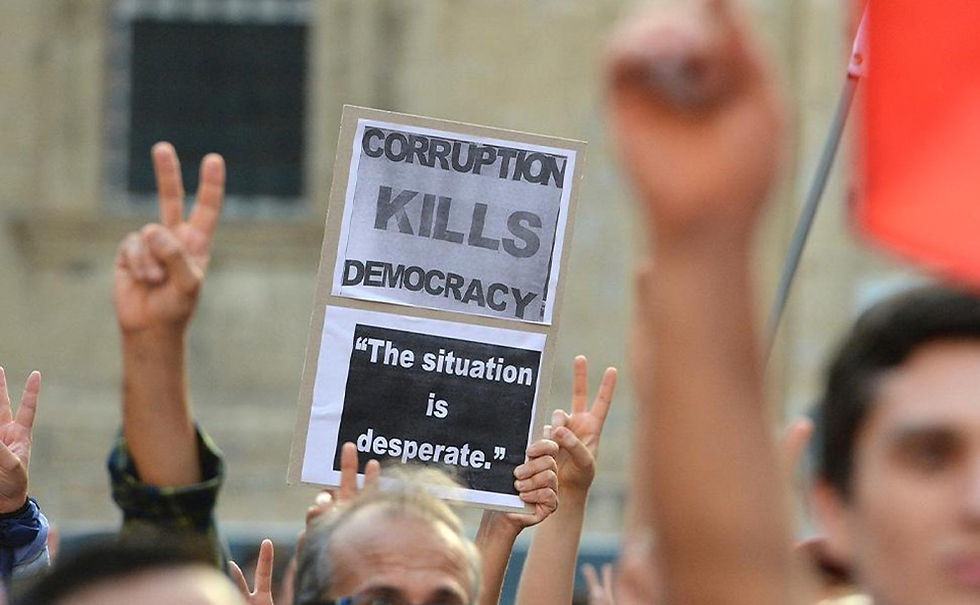
The President’s State of the Nation initiative invites us to reflect on the kind of country we are becoming. Beyond economic success, it challenges us to ask a more fundamental question: What is the true state of Malta’s democracy and its institutions?
“Something is rotten in the state of Denmark.” Shakespeare’s famous words from Hamlet describe a society where institutions meant to protect justice, truth and the common good begin to lose their strength.
This expression applies far beyond Shakespeare’s Denmark. It speaks to any society where citizens begin to feel that accountability is weakening, that influence matters more than integrity and that some people may be above the rules.
This is why the phrase resonates in Malta today.
Corruption has existed throughout history and no country is immune. Wherever there is power, there is always the temptation to abuse it. The real test of a democracy is not whether wrongdoing occurs but whether institutions are strong enough to expose it, investigate it and ensure that justice applies equally to everyone.
The danger begins when corruption is no longer viewed as isolated acts by individuals but as part of a wider culture where institutions fail to protect the public interest.
That is when the rot begins to spread.
The ongoing court proceedings involving Yorgen Fenech have once again placed Malta’s institutions under intense public scrutiny. The evidence and testimony presented in court have raised serious questions about alleged links involving political figures, business interests, senior police officers and other public officials. Although it remains the responsibility of the courts to establish the facts and determine criminal responsibility, the wider concern cannot be ignored: whether Malta’s institutions have always been strong and independent enough to confront powerful interests.
A democracy is not measured by whether wrongdoing ever takes place; it is measured by whether wrongdoing is exposed, investigated and punished, regardless of who is involved.
When citizens begin to believe that some individuals are untouchable, public trust begins to collapse. When connections appear more valuable than competence and when accountability is perceived as selective, democracy itself suffers.
Over the past 13 years, many Maltese citizens have expressed concern that a culture of “anything goes” has developed, weakening checks and balances and allowing a perception of impunity to grow. The public inquiry into the assassination of Daphne Caruana Galizia highlighted serious failures by the State and identified a climate of impunity as one of the factors that contributed to the conditions in which such a tragedy could occur.
The lesson should have been clear: a democracy cannot survive without strong institutions and a culture of accountability.
Labour’s years in office have been overshadowed by repeated corruption scandals, allegations of institutional failure and concerns about the proximity between elements of political power and persons associated with criminal circles. Whether judged ultimately by the courts or by history, the damage to public trust has been significant.
The Opposition must also reflect on its own responsibility. In my opinion, it missed an opportunity to place corruption, accountability and declining standards in public life at the centre of the national debate, perhaps out of fear of being labelled negative.
Yet, fighting corruption is not negativity. It is one of the most important responsibilities of any democratic opposition.
Citizens expect an Opposition with a strong and determined voice against corruption – not one measured by social media popularity, Facebook likes or carefully staged photographs but by courage, conviction and the willingness to stand up for what is right. Its role is to challenge power, expose without fear or favour any wrongdoing, demand accountability and give a voice to those who feel unheard.
At the same time, the fight against corruption should never belong to one political party. It belongs to every citizen who believes in fairness,
justice and the rule of law. Citizens must be willing to move beyond political bubbles, speak up when principles are at stake and refuse to accept what is unacceptable.
Corruption thrives when society becomes passive. It weakens when citizens demand better.
The question we must ask ourselves is whether civil society must once again rise to defend the values that sustain our democracy.
Can the united voice of civil society once again become the voice of reason, integrity and responsibility?
A healthy democracy cannot depend only on politicians or institutions; it depends on citizens who are willing to participate, question, challenge and demand better.
Democracy is not protected by silence but, rather, by people who care enough to stand up when principles are at stake.
Malta needs renewed commitment to institutional independence, transparency and accountability.
The rot runs deep but it is not beyond repair.
The future of Malta will depend on whether we ignore the problem or find the courage to be active citizens that confront it, restore trust and ensure that no one stands above the law.
(This article was published on Times of Malta – 10 August, 2026)